

Part of THREAD™, the operating lens inside the Minotaur Method™: six kinds of attention that complex work asks for. You enter where the work is actually stuck, not in a fixed order. This piece reads Horizon.
Imagine being asked to deliver a three-year plan in ninety days for a business unit you have run for ninety days.
A new division head sits down to start. The parent company sent over a template. The template asks for a vision, a strategy, three financial scenarios, an org chart for year three, and a roadmap. Each box has a deadline. None of the boxes ask the question she actually needs to answer first, which is what kind of place she’s operating in.
She does not have a planning problem. She has a horizon problem.
The THREAD™ operating framework names six stages. Target answers what deserves attention right now. Horizon is the vantage that asks a different question. What is the wider field showing me.
Horizon Is the Terrain, Not the Forecast
Picture a captain standing on a hilltop above a valley.
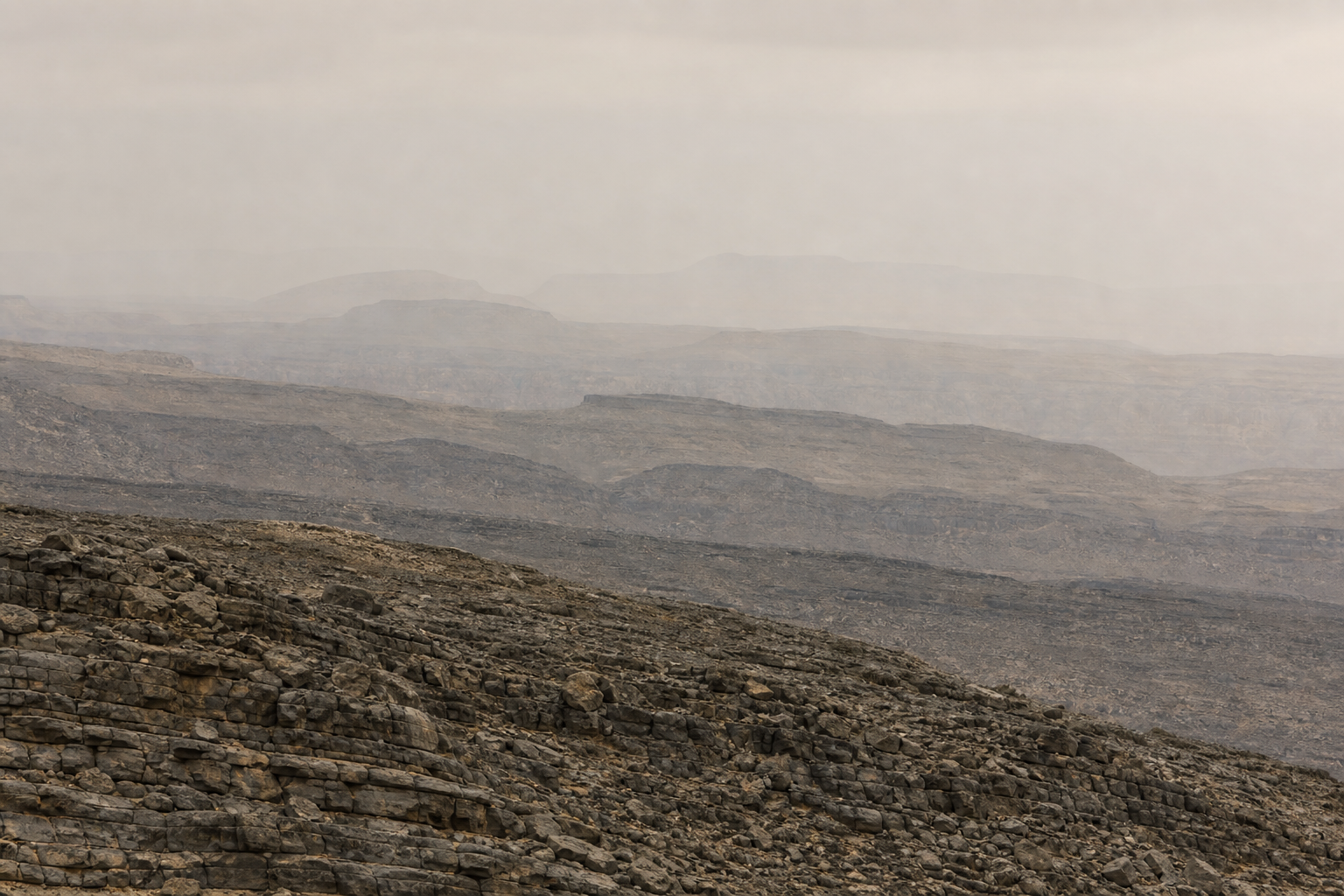
He’s not predicting the weather. He’s reading the terrain. He notices where the rivers run. He sees where the road bends out of sight. He watches for movement on the far ridge. He marks the places where fog tends to gather. He’s not trying to know the future. He’s trying to know the field he’s standing in well enough that whatever happens next doesn’t surprise him.
That’s what Horizon does. It is the practice of reading the field around a decision before the decision gets made.
Forecasting is a different stage. Scenario planning is a different stage. Vision-setting is a different stage. Horizon sits underneath all of them. It is the work of seeing what’s actually present in the situation, including what has been quietly drifting and what has been hiding outside the immediate frame.
A leader who skips Horizon ends up making sharp decisions about a field she hasn’t yet seen clearly. The decisions look decisive in the moment. They fail predictably six months later, because they were built for a terrain that didn’t match the one she was actually standing in.
Horizon is awareness. Forecasting is prediction. The two are not the same work.
Horizon Asks Three Questions, Not One
Watch a leader who runs Horizon well. She’s not staring into the future. She’s asking three specific questions about the present, and letting the answers shape what comes next.
The first question is about stakeholders. Who is in this field that is not currently in the room. The investor who hasn’t weighed in yet. The customer segment whose feedback has gone quiet for two quarters. The senior engineer whose departure no one has named out loud. Horizon surfaces the presences that get omitted from the decision because they are uncomfortable to name.
The second question is about second-order effects. If this decision moves through, what does it produce six months later. Not the intended outcome. The other thing. The change to hiring posture. The signal to the rest of the team. The shape of the next pricing conversation, which hasn’t happened yet. Horizon makes room for the consequence the team hasn’t modeled.
The third question is about drift. What has been changing slowly enough that we stopped noticing. The customer-acquisition cost that has been creeping up for three quarters. The senior team’s energy that has been dimming since the last reorg. The kind of customer the sales team is no longer enthusiastic about. Horizon catches the things that are too gradual to register in any one week and too consequential to ignore in any one year.
A team that asks all three regularly builds situational awareness. A team that asks none builds confident plans on top of unseen terrain.
Horizon Is Wider Than the Decision That Triggered It
Take a CEO sitting down to decide whether to open a second office.
The narrow version of the question fits on a spreadsheet. Cost of rent. Cost of furnishing. Headcount needed. Revenue justification. She works through the numbers and the answer is yes. She’s about to say yes.
The Horizon version of the question is wider. Where is the talent pool actually shifting. What does a second office signal to the senior team that has been working remotely for two years. What does it mean for the next round of hiring posture. What does it imply about the company’s commitment to a particular city, and what investors are watching that signal. What happens to the founding team’s identity if the company stops being a one-office company. None of these change the spreadsheet. All of them change the shape of the decision.
Horizon does not replace the spreadsheet. It widens the field the spreadsheet sits inside.
This is why Horizon work feels uncomfortable to leaders who have been rewarded for crisp decisions. It does not produce a single answer. It produces a richer picture of the decision, which sometimes leads to a clearer answer and sometimes leads to a different question.
A decision made without Horizon is not necessarily wrong. It is unsurveyed.
Horizon Closes When the Field Is Visible Enough to Move Through
Horizon does not close because the leader has predicted the future. It closes because she has surveyed the field well enough that the next move can be chosen with awareness instead of guesswork.
Three signals that Horizon has closed.
The major stakeholders who shape the outcome have been named, even the ones whose presence is inconvenient. The likely second-order effects of the candidate move have been said out loud, even when nobody likes them. The slow drifts in the field have been surfaced and acknowledged, even if no immediate action is taken on them.
When all three are present, the field has been read. A common next move is Resource: Do I have what I need to move through this terrain? You’re not required to take the stages in order. That’s a different question, with its own work.
When any of the three is missing, the field hasn’t yet been read. Pushing into Resource produces capacity planning against a field that was never properly seen. The plans look credible. They fail in contact with the parts of the terrain the team didn’t look at.
Horizon is the stage that earns the right to act with awareness.
What This Means in Your Week
Three moves to run Horizon on a stuck decision before you push it forward.
- Pick one decision that is in front of you this week. Write the three Horizon questions next to it. Who is in this field that is not in the room. What does this produce six months later that I haven’t modeled. What has been changing slowly that I stopped noticing. Answer each in one sentence.
- Bring the questions to your leadership team without the decision. Ask them, not for opinions on the move, but for what they see in the field. Listen for what surprises you.
- After the conversation, notice which of the three questions produced the most discomfort. That is the part of the terrain that has been least surveyed. That is where Horizon work goes next.
Where this leads
Horizon is one of six kinds of attention THREAD™ names, not a step in a line. You enter where the work is stuck and move to whatever vantage the situation asks for next. Lean only on Horizon and you get rich awareness with no movement. Ignore it and you move fast through terrain you haven’t seen clearly.
The THREAD™ Path page walks the full hexagon: all six, what each does and what each does not. About a fifteen-minute read.
Read across the lens: Target · Horizon · Resource · Evaluate · Act · Develop.