

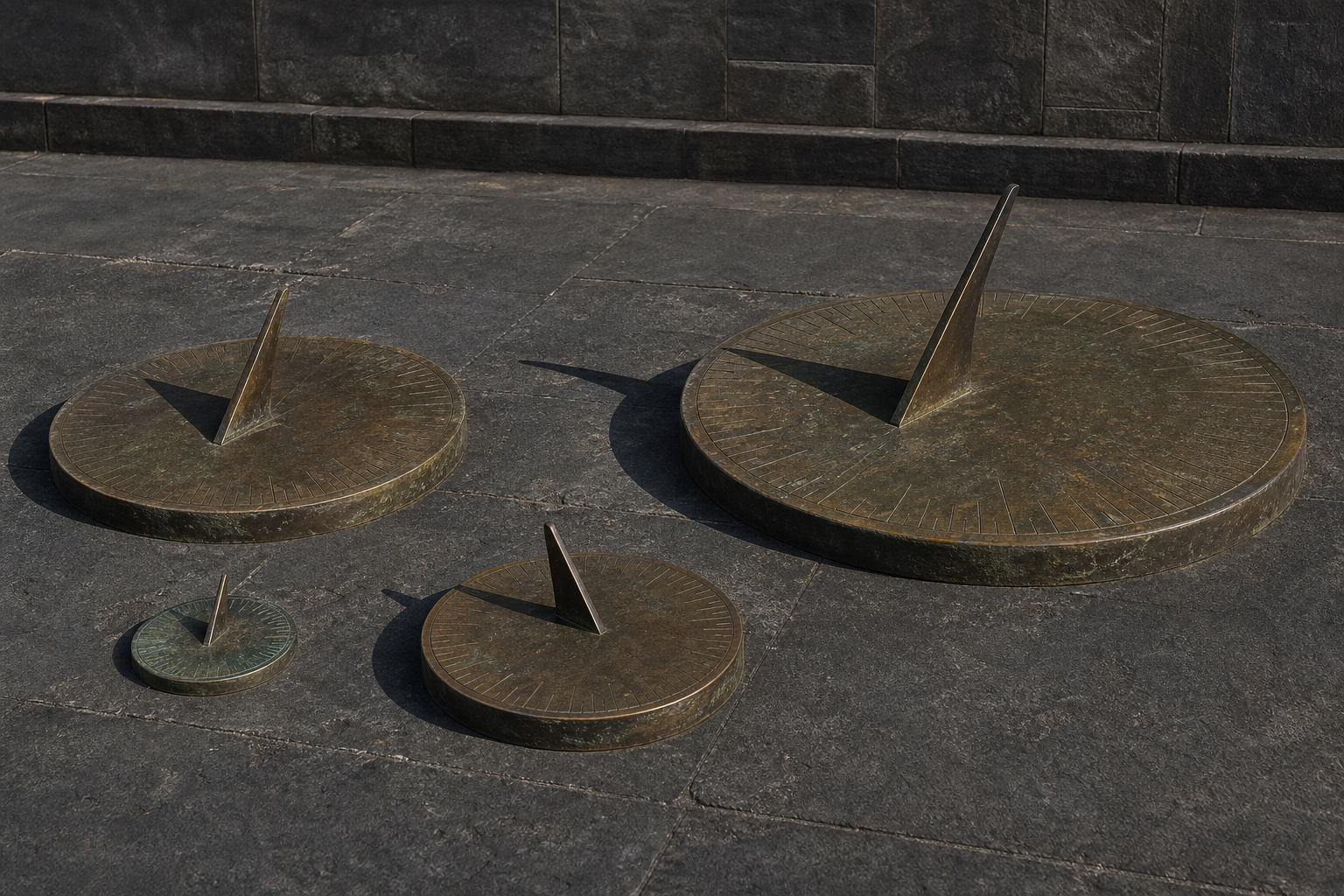

Part of THREAD™, the operating lens inside the Minotaur Method™: six kinds of attention that complex work asks for. You enter where the work is actually stuck, not in a fixed order. This piece reads Horizon.
Picture a Tuesday morning leadership meeting. Nothing’s on fire. The agenda has four items, and every one of them is reasonable.
Item one is a pricing change for an enterprise customer who’s been waiting since Friday. Item two is the platform rebuild the CTO has been pushing for three quarters. Item three is next year’s hiring plan. Item four is whether to renew an office lease that ends in February.
Forty-five minutes in, the team’s talking past each other. The head of sales is arguing the pricing call like it’s a long-term strategic shift. The CTO is talking about the rebuild like it has to land this week. Nobody notices what’s actually going on. They’re all in the same meeting, and not one of them is in the same conversation.
This is the most common form of strategic confusion, and it doesn’t feel like confusion. It feels like disagreement.
It is not disagreement. It is a horizon problem.
Two-Week Decisions Don’t Belong in Two-Year Meetings
Picture each item on that agenda as a different distance away.
The pricing question is two weeks out. It needs an answer by Friday or the customer churns. The rebuild is two years out. That’s how long it’ll take to design, staff, and ship. The hiring plan sits at a year. The lease sits at six months.
Now put all four on the same table, give them the same forty-five minutes, and hand them to the same people. Each person walks in with a private sense of which one matters most. The CTO’s in two-year mode. The head of sales is in two-week mode. The CFO is somewhere in between, mostly watching the spreadsheet on item three. Nobody’s wrong. Everybody’s on a different clock.
The team leaves frustrated and can’t quite say why. The decisions got made. The next ones will get made the same way.
Hold four time scales in the same hour and you get a kind of strategic blur. Every conversation half-resolves. None of them close cleanly. The team learns that meetings produce motion, not clarity.
Every Decision Has a Horizon, Whether You Name It or Not
A founder making a pricing call thinks she’s answering one question. She’s actually answering two.
The first is what’s the right price for this customer this quarter. That’s the two-week horizon. It’s concrete. It has a number, a deadline, a customer on the other end of the line.
The second is what does this signal to the market about our pricing for the next eighteen months. That’s the long horizon. It’s shaped rather than concrete, and its consequences won’t surface for a year.
Miss the split, and she answers the long question with short logic. She hands over a discount that solves Friday and quietly rewrites the company’s pricing reputation for a year. Or she answers the short question with long logic, refuses to discount on principle, and loses a customer who’d have happily stayed.
A two-week problem decided with two-year gravity becomes paralysis. A two-year problem decided with two-week urgency becomes regret.
Watch a team that handles this well. Before anyone digs in, someone names the horizon out loud. This is a six-week decision. This is a two-year decision. This one’s now or never. The room adjusts its posture. Short calls get sharp answers. Long calls get widening conversations. Each one gets the attention its actual distance asks for.
The Diagnostic Move Is Naming the Time Scale Out Loud
The fix is small enough to feel like it can’t possibly work. Before a discussion opens, declare its horizon.
Two weeks. Two quarters. Two years.
That’s the whole move. Three words at the top of an agenda item. This is a two-week decision. This is a two-year decision. The room hears it and resets. The people braced for a long conversation realize this one’s short. The people treating the question casually realize the implications run further than they thought.
There’s no framework to deploy here. No system to install. Just a sentence at the top of the item that tells the room what kind of room it’s in for the next fifteen minutes.
The leaders who do this aren’t better strategists than their peers. They’ve just worked out that a meeting can’t produce clarity until it agrees on what it’s a meeting about. Horizon is a load-bearing part of that agreement.
Conversations Reshape Themselves Around a Named Horizon
Take that same Tuesday meeting and add one move at the top of each item.
The pricing question gets named as a six-week call. The room shifts. The head of sales talks faster. The CFO opens the right spreadsheet. The CTO stops trying to tie it to the rebuild, because the rebuild’s on a different clock and somebody finally said so. The decision lands in twelve minutes.
The rebuild gets named as an eighteen-month decision. The CTO opens up. The people who were checking their phones look up. The head of sales stops bolting quarterly milestones onto it, because she knows now that’s not the conversation. The room widens. They don’t resolve it in the meeting, and they aren’t supposed to. They name two questions to settle before next month, and the item closes clean.
The hiring plan gets named as a one-year shape with quarterly checkpoints. The lease gets named as a six-month operational call. Each one gets the kind of attention that fits its distance.
The meeting ends on time. Three decisions closed, one sequenced, nobody frustrated.
Most strategic disagreement is a horizon problem in disguise.
What This Means in Your Week
Three moves to install before your next leadership meeting.
- Print your current agenda. Next to each item, write the horizon in plain words. Two weeks. Six months. Two years. Now or never. If you can’t name the horizon, the item isn’t shaped enough to discuss yet.
- At the top of each item, say the horizon out loud before the discussion opens. One sentence. This is a two-week call. Watch what shifts in the room.
- After the meeting, look at whatever didn’t resolve cleanly. Most of those will be items where two horizons were running at once. Name the one that was hidden, and put it on the next agenda by itself.
Where This Leads
A team that names horizons cleanly makes faster decisions and trusts them more. A team that doesn’t makes the same number of calls and second-guesses every one. The difference isn’t strategy. It is the discipline of saying out loud what kind of conversation is in the room.
The TORCH™ Brief is a thirty-item assessment that surfaces the pattern your decisions are actually being shaped by. About ten minutes. The result is yours.
Read across the lens: Target · Horizon · Resource · Evaluate · Act · Develop.